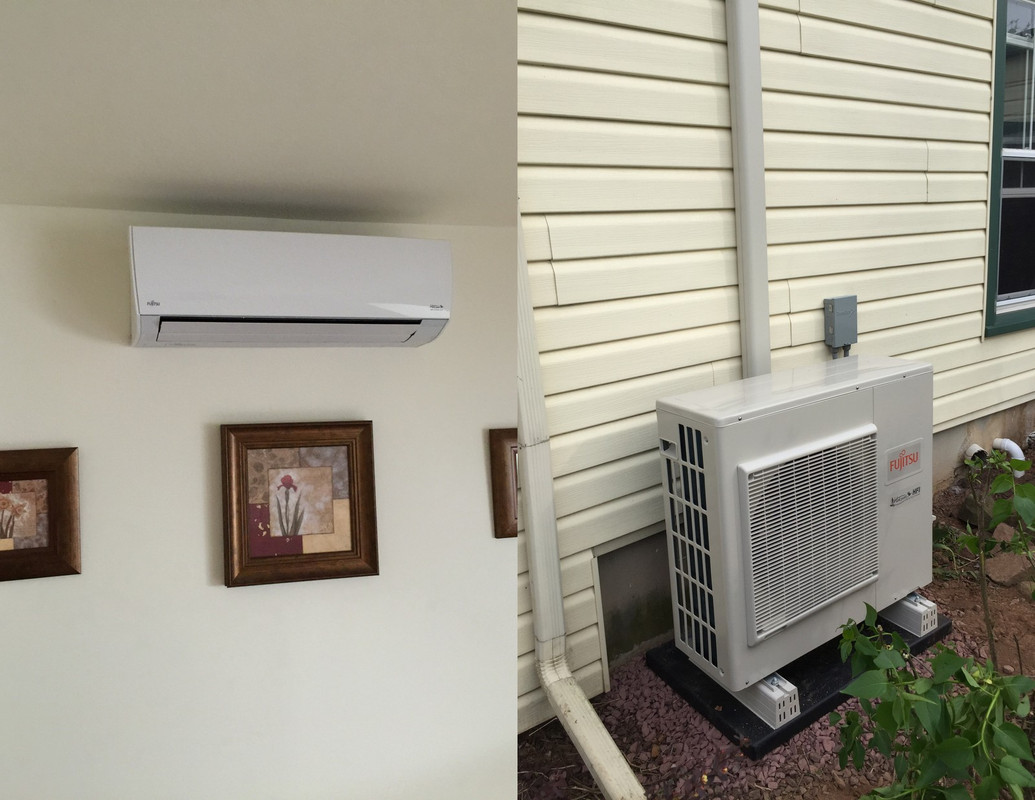
Central air conditioners flow cool air through a system of supply and return ducts. Supply ducts and signs up (i.e., openings in the walls, floorings, or ceilings covered by grills) bring cooled air from the ac system to the house. This cooled air ends up being warmer as it circulates through the house; then it flows back to the main air conditioner through return ducts and registers.
Air conditioners assist to dehumidify the incoming air, but in very humid climates or in cases where the air conditioning system is large, it might not accomplish a low humidity. Running a dehumidifier in your air conditioned home will increase your energy usage, both for the dehumidifier itself and due to the fact that the ac system will need more energy to cool your house. A more effective option is a dehumidifying heat pipeline, which can be added as a retrofit to most existing systems.
If you have a central air conditioning system in your home, set the fan to shut off at the exact same time as the compressor, which is typically done by setting the "vehicle" mode on the fan setting. In other words, do not use the system's central fan to offer air circulation-- use circulating fans in specific rooms.
Kinds Of Central Air Conditioning Conditioners
A central air conditioner is either a split-system unit or a packaged unit.
In a split-system central air conditioning conditioner, an outside metal cabinet contains the condenser and compressor, and an indoor cabinet contains the evaporator. In many split-system air conditioners, this indoor cabinet likewise contains a heater or the indoor part of a heatpump. The ac system's evaporator coil is set up in the cabinet or main supply duct of this heating system or heatpump. If your house currently has a heating system however no a/c, a split-system is the most cost-effective central air conditioner to set up.
In a packaged main air conditioner, the evaporator, condenser, and compressor are all situated in one cabinet, which normally is placed on a roofing or on a concrete piece next to your home's structure. This type of a/c likewise is utilized in little commercial structures. Air supply and return ducts come from inside through the home's exterior wall or roofing to connect with the packaged air conditioning unit, which is normally located outdoors. Packaged a/c unit typically include electric heating coils or a gas furnace. This combination of ac system and central heater removes the need for a different heating system indoors.
Choosing or Updating Your Central Air Conditioner
Central air conditioners are more effective than room air conditioning unit. In addition, they are out of the method, quiet, and hassle-free to operate. To conserve energy and cash, you ought to try to purchase an energy-efficient a/c unit and minimize your central air conditioner's energy usage. In a typical air-conditioned house, cooling consumes more than 2,000 kilowatt-hours of electrical power per year, triggering power plants to emit about 3,500 pounds of carbon dioxide and 31 pounds of sulfur dioxide.
If you are thinking about adding main air conditioning to your house, the deciding factor might be the need for ductwork.
If you have an older central air conditioning conditioner, you might pick to change the outdoor compressor with a contemporary, high-efficiency system. If you do so, seek advice from a local heating and cooling contractor to assure that the new compressor is effectively matched to the indoor system. However, thinking about recent modifications in refrigerants and air conditioning styles, it might be better to change the whole system.
Today's best a/c unit utilize 30% to 50% less energy to produce the very same quantity of cooling as ac system made in the mid 1970s. Even if your ac system is just 10 years old, you might save 20% to 40% of your cooling energy expenses by changing it with a newer, more effective model.
Correct sizing and setup are essential aspects in determining a/c unit efficiency. Too large an unit will not effectively eliminate humidity. Too small a system will not be able to attain a comfy temperature level on the most popular days. Incorrect system location, absence of insulation, and incorrect duct setup can greatly diminish efficiency.
When purchasing an a/c, try to find a model with a high efficiency. Central air conditioners are ranked according to their seasonal energy performance ratio (SEER). SEER suggests the relative amount of energy required to supply a particular cooling output. Numerous older systems have SEER scores of 6 or less.
If your a/c is old, think about purchasing an energy-efficient model. Search for the ENERGY STAR ® and EnergyGuide labels-- qualified central units are about 15% more effective than basic designs. New domestic central air conditioner requirements went into result on January 1, 2015; see the effectiveness standards for main air conditioners for information, and consider buying a system with a greater SEER than the minimum for higher cost savings.
The requirements do not need you to alter your existing central air conditioning systems, and replacement parts and services need to still be readily available for your house's systems. The "life-span" of a main air conditioner has to do with 15 to 20 years. Makers generally continue to support existing devices by making replacement parts offered and honouring maintenance agreements after the new standard enters into effect.
Other functions to look for when purchasing an a/c unit consist of:
- A thermal expansion valve and a high-temperature ranking (EER) higher than 11.6, for high-efficiency operation when the weather condition is at its hottest
- A variable speed air handler for brand-new ventilation systems
- An unit that runs quietly
- A fan-only switch, so you can utilize the system for nighttime ventilation to significantly decrease air-conditioning expenses
- A filter check light to remind you to inspect the filter after an established variety of operating hours
- An automatic-delay fan switch to turn off the fan a few minutes after the compressor switches off.
Setup and Area of Air Conditioners
If your air conditioning system is installed correctly, or if major setup issues are discovered and fixed, it will perform effectively for many years with only minor regular maintenance. However, lots of a/c are not set up correctly. As an unfortunate result, modern-day energy-efficient air conditioning unit can perform practically as badly as older ineffective designs.
When installing a brand-new main air conditioning system, be sure that your specialist:
- Allows adequate indoor area for the setup, maintenance, and repair of the new system, and installs an access door in the heater or duct to offer a way to clean up the evaporator coil
- Utilizes a duct-sizing approach such as the Cooling Professionals of America (ACCA) Handbook D.
- Ensures there are enough supply signs up to provide cool air and adequate return air registers to bring warm house air back to the air conditioner.
- Installs duct work within the conditioned space, not in the attic, any place possible.
- Seals all ducts with duct mastic and greatly insulates attic ducts.
- Locates the condensing unit where its noise will not keep you or your neighbours awake at night, if possible.
- Locates the condensing system where no nearby items will block air flow to it.
- Verifies that the newly set up air conditioning unit has the specific refrigerant charge and airflow rate specified by the manufacturer.
- Locates the thermostat away from heat sources, such as windows or supply registers.
If you are replacing an older or stopped working split system, be sure that the evaporator coil air conditioner is changed with a brand-new one that exactly matches the condenser coil in the new condensing unit. (The air conditioner's efficiency will likely not improve if the existing evaporator coil is left in place; in truth, the old coil might cause the new compressor to fail prematurely.).