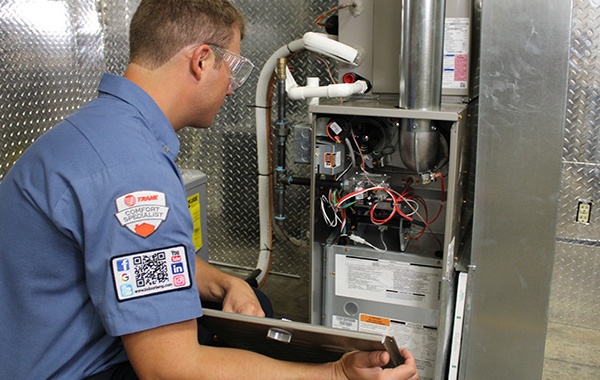
Considering a heating system replacement? If your old furnace is often breaking down or needs pricey repairs-- a brand-new one may be the response. With the development in innovation, your brand-new furnace will be more effective, last longer, and most importantly reduce your heating bills considerably.
In addition, it will be a big relief that you won't have to keep calling the repair professional every 2nd day. When it pertains to replacing your old furnace, you desire your new devices to deliver comfort to your house while lessening your house energy expenses.
This article will check out all the elements of a heating system replacement including considerations to bear in mind prior to buying a brand-new heater, types of heaters, their benefits and drawbacks, and the numerous expense factors included.
So, if you have chosen to opt for a heater replacement, we will encourage you to start your research As Soon As Possible so that your new HEATING AND COOLING system (heating, ventilation, and cooling) remains in place before the winter.
The initial step will be to seek advice from a licensed professional to assist in the heater replacement or to install a heater. A pro will evaluate your house and determine the most economical (and finest) method to heat (or cool) it.
But initially, let us check out a few of the warning signs that you require to change your old furnace:
• Your furnace is more than 12 to 15 years old.
• It does not adequately heat your home anymore.
• It needs frequent repairs.
• Your energy expenses are increasing day by day.
• The heating system releases uncommon sounds or switches on/off irregularly.
• You can feel low indoor air quality.
• You are experiencing breathing problems or foul smells inside your house.
While deciding on the ideal type of furnace to get, you'll require to bear in mind numerous factors. These consist of:
1) Heating system efficiency
The very first quality you want in your brand-new furnace is that it ought to be energy effective. The heating ability of a heating system is determined in British Thermal Units (BTUs). Put simply, it describes the amount of heat that's needed to raise the temperature level of one pound of water by one degree Fahrenheit.
A heater's BTU will show how many units of heat your heating system will produce at 100% performance. Here's a little Mathematics for you-- to find the precise BTUs of your furnace, increase the input BTU by the efficiency % and you will get the output BTU.
While older heating systems were frequently ranked 80 percent efficient or less (in spite of operating on complete power), the newer models are ranked 90 to 95 percent variety. Also, most of them are two-stage models-- capable of performing at 65 percent first and then increase to 95 percent. You can also discover high-efficiency furnaces which are three-stage models and are understandably more pricey.
This jump in efficiency means a decrease in utility expenses. So, even if your furnace utilizes costly fuel, its high effectiveness will conserve you money in the long run.
Wish to find the cost savings of an energy star rated high-efficiency heating system? furnace maintenance Simply, multiply your monthly electrical costs by the distinction in the efficiency of your old and brand-new heater.
2) The ideal furnace size
A lot of average-sized houses typically require 30 to 60 BTUs per square foot. Having stated that, you require to keep in mind that you must select the BTUs according to your home.
Units with higher BTU effectiveness rankings aren't always much better for smaller houses. First of all, they cost more and secondly, they struck ideal temperature levels too rapidly-- shutting down more often.
Whether your home needs more or fewer BTUs depends upon the total square video footage of your area, your climate zone, or where your home lies.
3) The different kinds of furnaces: pros and cons
When it pertains to different kinds of heaters, you have the following alternatives:
1) Gas Heater
2) Electric Heater
3) Oil Furnace
GAS FURNACE
Cost: $1,200 to $2,500.
Pros:.
• Low-cost to purchase and install.
• Minimum repair work problems.
• Heats up a home much faster than an electric heater.
• Most popular choice.
• Ideal for locations with severe winters.
• Utilizes gas carefully in a HEATING AND COOLING system.
• Lasts 10 to twenty years.
Cons:.
• Regular upkeep and keeping track of needed for safety concerns.
• Tends to release low levels of carbon monoxide fumes.
• Complex setup, specifically if you do not have existing natural gas lines.
ELECTRIC HEATER.
Cost: $700 to $2,000.
Pros:.
• Cheapest to purchase and set up.
• Quick installation.
• Runs quietly.
• Needs minimal repairs.
• Performs better in locations with moderate environments.
• Does not launch carbon monoxide fumes.
• lasts 20 to 30 years.
Cons:.
• Takes longer than a gas heating system for heating air in your living space.
• Doesn't move heat.
• Running it can be costly.
• Uses a lot of power when heating up your house.
OIL HEATING SYSTEM.
Cost: $1,900 to $6,000.
Pros:.
• Produces 140,000 BTUs of heat per gallon.
• Heating oil tends to be more environmentally friendly than natural gas.
• Lasts 16 to 20 years.
Cons:.
• Requires fuel storage on your property.
• May release carbon monoxide gas fumes.
• Needs routine upkeep.
• Running is costly.
Some other furnace alternatives consist of green heating systems that are environmentally friendly. They not just assist keep the air tidy however likewise save you a significant amount of money. These consist of solar panels and geothermal heaters.
An electrical heat pump, for instance, is efficient and utilizes less electrical energy. It quickly moves heat in your house and may even offer thermal storage.
The only drawback is that these environment-friendly choices featured high upfront costs. It takes longer for homeowners to recoup their preliminary financial investment, often even over the life of your home. Interestingly, the federal government uses a 30% tax credit for some of these green heating systems in order to promote their usage.
Whichever furnace you go with, bear in mind that there will be other associated costs to consider. These include:.
1. Furnace replacement expenses.
While thinking about replacing your existing heating system, you need to keep the heater replacement expenses in mind.
Usually, the expense to replace a heater varies from $1,000 to $13,000. This amount depends on the type of furnace you select (the fuel it uses), your postal code, and labor charges.
Here are the approximate total setup expenses of the most popular choices:.
• Gas furnace: $2,000 to $10,000.
• Electric heating system: $1,200 to $7,000.
• Oil heater: $4,500 to $7,000.
• Geothermal pump: $3,000 to $30,000.
2. Labor expenses.
An expert furnace setup will cost you between $150 to $500 as labor charges alone. This kind of work is usually carried out in one day and normally requires 2 specialists at a rate of $50 to $100 per hour.
If you have extra work such as installing new ductwork, it will cost you a lot more.
3. Ductwork setup expenses.
Setting up brand-new ductwork will need you to spend an additional $3,000 to $5,000 or more. Your brand-new heating unit needs well-installed ductwork, vents, and filters. If you just want to get the ducts repaired, it will cost you about $1,000 to $5,000.
Duct installation or repair work costs will depend upon the variety of stories, intake or output vents, and the temperature-control zones your house has.
4. Heater replacement allows and examinations.
Most structure permits relating to a heating system cost between $400 to $1,500. You can add to it additional heater assessment costs of $100. The exact amount will depend on your geographical location. Both measures are definitely vital in making sure that your heating devices operates securely.
Last words.
You definitely need a brand-new heater if your old one is suffering regular breakdowns or needs expensive repair work every now and then.
If in doubt, remember an excellent guideline. If your old furnace is beyond three-quarters of its life expectancy and if any repair is costing you more than a 3rd of the heater replacement cost-- it is time to buy a brand-new one.
While choosing a brand-new heating system, ensure it is energy-efficient, durable, needs very little maintenance, and leaves behind a smaller sized carbon footprint.